
The Late Starter · September 3, 2026
A Chapter in My Late Start Retirement Journey
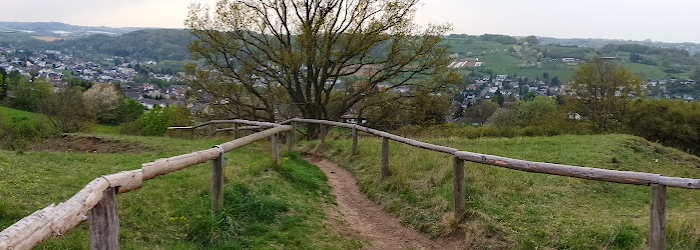
When I left Germany, I felt two things at once. Curiosity and excitement about a new continent. And, at the same time, a kind of grief — as if I were leaving home and family behind.
Our years in Germany had been a season of real comfort and growth for our family. It was where our children grew up, where they came to deeply experience and absorb German culture, where we made friends who felt like family and built a lifetime of memories. Leaving so many of those friends behind meant that, as time passed, I found myself missing Germany more and more.
Two Different Temperatures
The emotional climate of German society and American society turned out to be very different from each other.
Germany differed from Korea in many emotional ways, but it was also surprisingly similar in others. The culture of taking warm, genuine interest in one another felt close to what I knew from Korea — though of course, this is only my own limited experience, not something I can generalize. A Vietnamese coworker I met at my American company, who had also earned his Ph.D. in Germany and worked at a research institute there, carried an entirely different set of memories from mine.
The image I formed of America once I arrived also turned out to differ from what I had imagined beforehand. America is often called a land of diversity, a melting pot of races — but look closely, and that description starts to raise questions. Social class, race, language, and skin color seemed to divide people’s living spheres far more visibly than they had in Germany. I watched, in particular, how first-generation immigrants stayed enclosed within their own cultural and linguistic communities, and how that isolation extended even into the second generation.
The Hallway With No Greeting
The shock I experienced working in an American company ran even deeper.
One day, walking down a narrow hallway at the office, I passed a coworker coming the other way. Out of habit, I made eye contact, ready to greet him. But his gaze stayed fixed straight ahead, and he walked right past me without a word.
At first, I assumed it was just an unusual moment. Over time, though, I came to understand it was simply how things worked here. People who already knew each other would greet one another by name in passing. But a stranger, or someone you weren’t close to, didn’t get a greeting at all.
I’ve only ever worked at one company here, so I can’t generalize — maybe Korea works the same way. But I had spent years in Germany growing accustomed to a culture where even strangers greeted each other and asked how the other was doing whenever their paths crossed. So that moment in the hallway landed on me as a genuine shock.
Differences That Show Up in the Small Things
Even the sight of a stack of high-quality disposable cups in the office kitchen left me feeling uneasy. Having lived in a Korea and a Germany where conservation, recycling, and environmental care were simply part of daily life, I found myself noticing the waste — and the environmental cost of it — everywhere in America.
This next observation, too, is just my own narrow personal experience, and I won’t generalize it. In Germany, boys are taught from childhood to sit down to urinate, and most adults continue that habit for life. At my American company, I often noticed that when the urinals were all in use, men would use the stalls instead — and not only did they not sit, they frequently didn’t even lift the seat first. Whether this comes from a lack of consideration for others, or simply a different standard of cleanliness, I still don’t know.
The Speed of Intimacy
One thing I noticed personally was a real difference between Americans and Germans in how quickly — and how openly — people let others in.
Germans can seem cold or distant at first. But once you become friends, that relationship tends to run deep and stay solid, almost like family, for a long time. Americans, by contrast, have a culture of being friendly and quick to strike up conversation — but that friendliness often stops right there.
Of course, I was in my early thirties when I lived in Germany, and in my early forties when I came to America. So some of this difference in how quickly I opened up, and how open I was, may simply reflect where I was in my own life at each point.
An Unexpected Threshold
From the perspective of a foreign worker, there was one striking paradox.
America — with its H-1B visa lottery and everything else — made maintaining legal status extremely difficult. Germany, by contrast, made obtaining permanent residency and citizenship after employment relatively straightforward. This came as something of a surprise to me. I’d carried the assumption that Germany, not being a country built on immigration, would surely be the harder path.
My wife and I received permanent residency in our seventh year in Germany, after a simple interview conducted in German. A year later, we became eligible for citizenship through a government-sponsored Integration program. In America, by comparison, the process was far more complicated and took far longer.
Two Countries, Two Kinds of Time
For an engineer like me, career growth and the compensation that comes with it matter a great deal. Measured against that standard, the two countries turned out to have almost opposite sets of strengths and weaknesses.
Germany has a low visa barrier but a high language barrier, along with a more bureaucratic culture and a tendency toward income equalization. America has a high visa barrier but a low language barrier, and it offers wide-open opportunities for aggressive career growth and financial freedom.
Which leaves me with this thought, more and more these days:
America may be the place suited to the active, ambitious years of life. Germany may be the place suited to a settled, stable life after retirement.
I’m standing now near the tail end of those active years. I know the chances of ever moving back to Germany are close to none. But every so often, I still find myself missing that quiet, warm temperature of German life.