
The Late Starter · September 7, 2026
A Chapter in My Late Start Retirement Journey
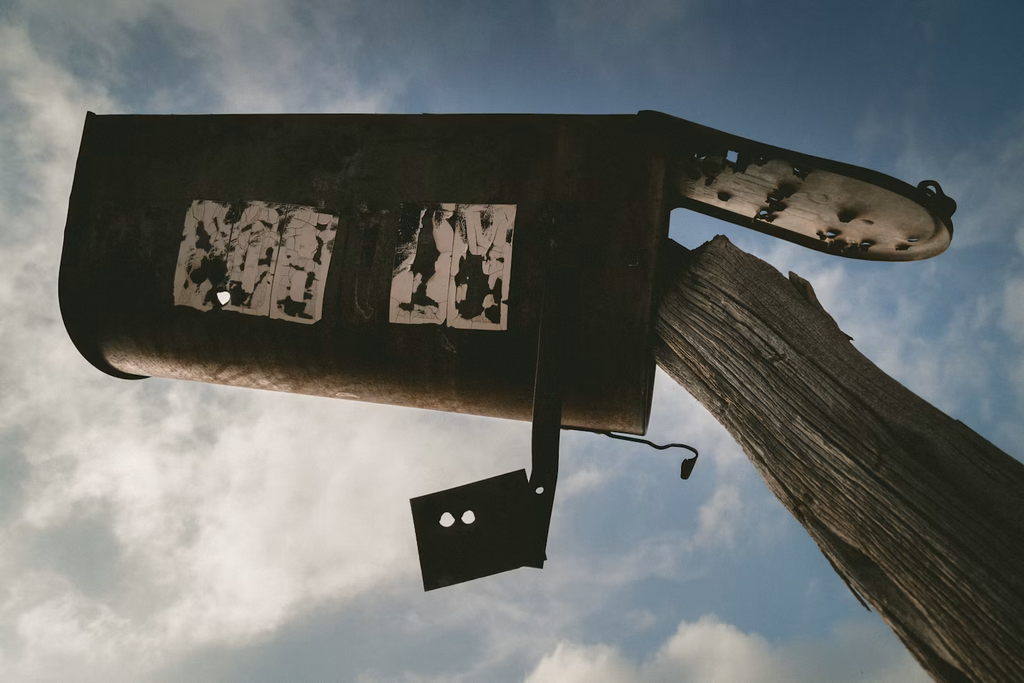
The 401(k) he left behind still sits somewhere, unclaimed. A few years ago, a young engineer joined our company. He was Vietnamese, had earned his Ph.D. in Germany, and had spent a few years at another US company before coming to us. He was younger than me by a good margin.
One day over lunch, I asked him, almost in passing.
“What happened to the 401(k) from your last job?”
He hesitated for a moment, then answered. He’d enrolled in one, but had no idea what had happened to it since.
Left Behind Like a Forwarding Address
He didn’t know he needed to roll it over. Nobody had told him it needed to go somewhere — into a Roth, into a new 401(k) — and he’d never looked into it himself.
He had simply left it there. The way you might leave a forwarding address you never actually follow up on, the mail just piling up somewhere you no longer live.
Listening to him, I felt something strange settle in. He reminded me of myself. Educated. Ambitious about his career. Genuinely capable. And, when it came to money, almost entirely illiterate.
A Problem I Never Actually Faced
Honestly, I’ve never faced this exact problem myself.
I haven’t changed jobs once since joining this company in 2008. The company has been acquired by others a few times along the way, and my 401(k) did get rolled over to a new provider once because of that. But that was handled for me. I never had to decide anything. Never had to sign anything, never had to figure out where the money should go. One day, it had simply moved.
In a way, I got lucky. I’ve never once had to make the decision to move an account myself. But that wasn’t because I was particularly wise about any of it. It was just how things happened to unfold.
So I can only look at this problem as an outsider looking in. And from that vantage point, it turns out to be far more common than I would have guessed.
Not His Story Alone
Apparently it’s not unusual in America for people to leave a 401(k) behind at a former employer every time they change jobs — or simply forget about it altogether. The account itself doesn’t disappear. The money is still sitting there. It’s the awareness of it that vanishes.
My coworker was no different. He hadn’t made a bad decision. He’d simply made no decision at all. And sometimes, that absence of a decision turns out to be the costliest choice of all.
A neglected 401(k) might still be invested and growing in the market, or it might be sitting untouched as cash, unmanaged by anyone. Either way, the real problem is that the account’s owner has forgotten it exists. An account can go on existing without anyone tending to it — but if its owner never folds it into their retirement plan, that money might as well not exist at all.
What I Learned
Listening to his story, I found myself circling back to my own 401(k) history.
I never faced the specific kind of neglect that comes from switching jobs. But I had my own version of not paying attention to my money — in different forms. The contribution rate that sat at 6% for years without moving. The money that left through a loan. The contributions I cut during COVID. All of it, in the end, traced back to the same root: not looking closely enough.
He forgot the account existed. I remembered mine existed, but stayed indifferent to what was happening inside it. Different shapes, same underlying problem.
He left our company after about two years, and moved on to another job. Since then, from what little I know, he’s changed jobs a few more times.
I don’t imagine he dutifully opened a new 401(k) every time he switched jobs. He didn’t seem to know what a 401(k) even was in the first place, let alone what a rollover meant. It’s entirely possible he never enrolled in one again at any of his subsequent jobs. Or if he did, he may still have no idea how to manage it.
I have no way of knowing how many 401(k) accounts might be sitting somewhere under his name right now, quietly asleep — or whether nothing has accumulated at all since then.
A Question Worth Asking, Even Late
I never asked him. But that conversation left me with a small question of my own.
Is there money out there, somewhere, that I don’t even know exists?
As far as I know, there isn’t. But I’ve been wrong about that kind of certainty before. I was wrong about my HSA. I was wrong about my national pension in Korea.
So maybe it’s a question worth asking myself again, every so often, for the rest of the way.