
The Late Starter · September 6, 2026
A Chapter in My Late Start Retirement Journey
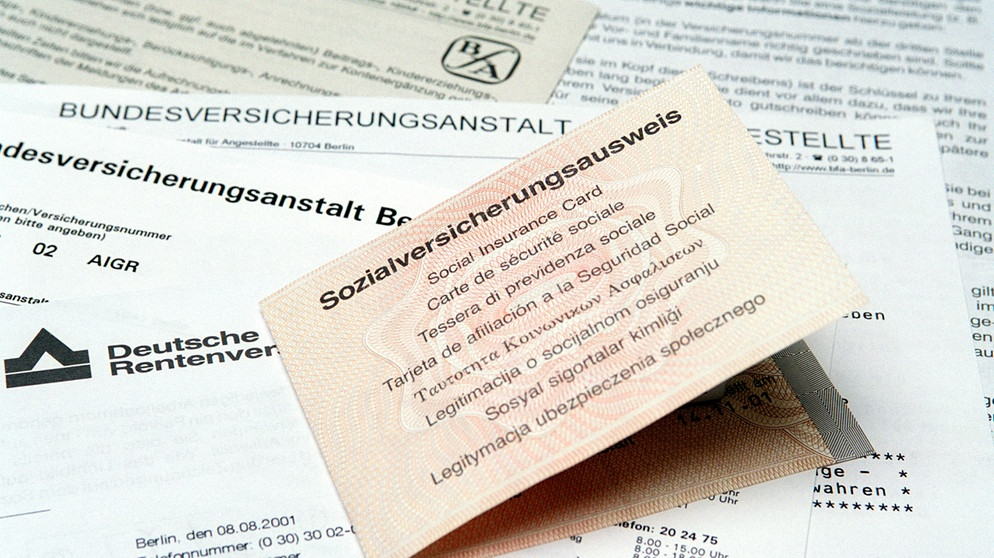
Three countries, two pensions left. Korea, Germany, and the United States. I worked in each of these three countries, paying into each country’s pension system.
And yet, only two of those pensions remain today.
Why One Pension Disappeared
During my years at Samsung Electronics in Korea, I faithfully paid into the National Pension every month. But when I emigrated to Germany, there was a specific provision at the time that allowed me to withdraw everything I’d paid into the National Pension as a lump sum. I took it.
Not everyone in Korea could withdraw their National Pension as a lump sum back then. It was a provision available specifically to people emigrating, like me. So that distrust wasn’t mine alone, or unique to emigrants. Many people who stayed in Korea carried the same distrust — they just expressed it differently. By contributing the legal minimum whenever they could. As a result, I’ve heard, many of them now receive very little in retirement.
Looking back now, with retirement drawing closer, I think that vague distrust was never really grounded in anything. Whether someone withdrew everything like I did, or simply paid the minimum, we were all, in our own ways, paying a price for the same distrust. My pension in Korea disappeared, completely, in exactly that way.
A Quiet Accumulation in Germany
Germany told a different story.
The pension points (Rentenpunkte) I accumulated while working there satisfied the minimum qualifying period, and I became eligible for a German pension. Unlike what happened to my Korean pension, this wasn’t something I had deliberately protected. It was simply the quiet result of time spent working in Germany.
Here’s something else I learned along the way. There’s a Social Security Agreement (Totalization Agreement) between the US and Germany that allows, when needed, coverage periods earned in one country to be combined with the other’s for purposes of determining eligibility. That doesn’t mean my years working in the US get added directly to my German pension amount, though. In the end, what I actually accumulated while working in Germany is what my German pension is based on.
In 2007, while living in Germany, I received a letter from Deutsche Rentenversicherung. It projected that if I started drawing my pension at 67, I could expect around 300 euros a month.
Then in 2013, when I returned to Germany over the green card situation and completed my Anmeldung (residence registration), I received another letter. This time, the projected amount had been adjusted to around 450 euros.
I didn’t look into exactly why the figure changed back then. But six years had passed between those two letters, and the number had moved from 300 to 450.
A Request Left Unanswered
I still keep my German Sozialversicherungskarte (social insurance card), and I still have my Sozialversicherungsnummer (social insurance number).
But when I actually tried to verify my records recently, it turned out to be less straightforward than I expected. I’ve submitted several online requests for my Versicherungsverlauf (contribution history statement) and Rentenauskunft (pension information notice). So far, I haven’t heard back on any of them.
Whether this is a system issue, processing delays, or some step I’ve missed, I still don’t know. But this experience taught me something clearly: a pension isn’t just about the money you paid in the past. It’s an asset you have to keep tracking and managing right up until retirement.
What I Worried About, and What I Didn’t Know
For a long time, I carried a different worry. I assumed that receiving a German pension would somehow reduce my US Social Security.
Only recently did I learn otherwise. On January 5, 2025, the Social Security Fairness Act was signed into law, repealing the Windfall Elimination Provision (WEP) — the rule that had reduced US Social Security benefits for people also receiving a foreign pension. The repeal applies retroactively to benefits payable from January 2024 onward.
At least the specific problem I’d worried about — WEP reducing my US Social Security — is gone now. Finding out that I can receive what I’ve earned in both countries, separately, was a relief that came later than it should have.
The tax question has also become somewhat clearer. As I understand it, my German statutory pension will be taxed in the US, as a US resident, under the US-Germany tax treaty. There doesn’t appear to be a separate German tax obligation on it. The IRS treats this German pension similarly to US Social Security for purposes of calculating taxability. Still, I’ll need to confirm the exact type of pension and my tax situation again once I actually start receiving it.
Not Much, But Something Real
A few hundred euros a month. It’s not a large amount. This number alone won’t dramatically change my retirement plan.
When I was young, I never thought of a pension as “money I’d receive later.” It was just money disappearing from my paycheck, and honestly, I didn’t even trust that it would come back. Now, at sixty, looking back, my thinking has changed. A pension isn’t just about how much you paid in. It’s about what those choices, made at a certain point in time, turn into decades later.
In Korea, I dismantled my own pension with my own hands. In Germany, a pension remained without my paying it much attention at all. And in the US, I’m now actively building my own retirement assets.
My retirement preparation across three countries was never something planned from the start. Looking back, it’s closer to the traces left behind by choices made along the way, each one carrying the name of a pension.
In the next post, I want to walk through, step by step, what it actually takes to apply for the German pension — and how this unanswered request of mine finally got resolved.